Mental Health Blog & Resources
Mental health education, coping skills, wellness tips, trauma-informed resources, family support, and community information from Just Breathe LLC.
Welcome to the Just Breathe LLC Blog & Resources page. Here you'll find mental health education, coping skills, wellness tips, trauma-informed information, ADHD resources, family support, and practical tools designed to support emotional wellness, personal growth, and everyday well-being. Browse the topics below and click any image to view the full post.

Burnout: Recognizing the Signs and Protecting Your Mental Health
Burnout doesn’t happen overnight. It often develops after prolonged periods of workplace stress, emotional demands, heavy responsibilities, and not having enough time or resources to recover. Professionals such as teachers, nurses, physicians, mental health professionals, social workers, first responders, law enforcement, call center employees, and hospitality workers may experience increased risk because of the demanding nature of their work.
Signs of burnout can include emotional and physical exhaustion, difficulty concentrating, irritability, decreased motivation, feeling disconnected from your work, sleep changes, headaches, muscle tension, or feeling as though you have little left to give.
Preventing and managing burnout involves more than simply “taking a break.” Healthy boundaries, adequate sleep, regular movement, nutrition, supportive relationships, mindfulness and grounding techniques, workplace support, and professional mental health support can all play a role in managing chronic stress and improving emotional well-being.
Burnout can affect even people who genuinely love and find meaning in their work. Recognizing the warning signs early and developing sustainable coping strategies can help protect your mental health, strengthen resilience, and create a healthier balance between caring for others, meeting responsibilities, and caring for yourself.

Love Looks Different: Healthy Relationships, Connection & Self-Love:
Love doesn’t always look like grand gestures or picture-perfect moments. Sometimes love is showing up during difficult seasons, offering forgiveness, setting healthy boundaries, caring for someone who is struggling, laughing together, sitting quietly beside someone, or simply reminding another person that they are not alone. Love can exist between partners, family members, friends, parents and children, and even in the connection we share with our pets. It also includes the relationship we have with ourselves.
Healthy relationships aren’t defined by perfection or the absence of conflict. They grow through trust, respect, communication, patience, accountability, emotional connection, and the willingness to work through challenges together. Learning healthy communication and coping skills can help us express our needs, understand one another, manage conflict, and maintain connection during difficult seasons.
Self-love is an important part of that conversation too. Setting boundaries, practicing self-compassion, recognizing your needs, and giving yourself grace are not selfish—they are meaningful parts of emotional well-being and personal growth.
Love can look different for every person and every relationship. What matters most isn’t whether it looks perfect from the outside, but whether there is respect, safety, connection, and room for each person to grow.

Redefining Success: Progress Looks Different for Everyone
Success doesn’t always mean a promotion, financial achievement, perfect health, or having everything figured out. Sometimes success is getting out of bed, attending a mental health appointment, taking care of your health, asking for help, setting a healthy boundary, using a coping skill, or simply making it through a difficult day.
For individuals navigating anxiety, depression, trauma, grief, chronic illness, addiction, burnout, or other life challenges, progress may look very different from what society traditionally defines as success. Healing and personal growth are rarely linear, and some of the smallest victories can require tremendous courage, resilience, and strength.
As a mental health professional and business owner, I’ve also learned to define success differently. While growth and financial stability are important parts of running a business, they are not what motivates me most. Success is knowing that someone felt heard, understood, supported, or a little less alone. It’s hearing someone say, “I stood up for myself,” “I used my coping skills,” “I made it through the week,” or “I have hope again.”
Success doesn’t need to be measured against someone else’s journey. Sometimes meaningful progress is simply recognizing how far you’ve come and taking one more step forward.

You Deserve Support:
Sometimes the hardest part isn’t knowing what to do—it’s believing you deserve support in the first place. Life can feel overwhelming, especially when you’re navigating anxiety, depression, grief, trauma, chronic illness, relationship challenges, burnout, or ongoing stress. These experiences can affect emotional well-being, relationships, confidence, and daily functioning, and they can leave people feeling isolated or unsure of where to begin.
Mental health support can provide a safe space to process difficult experiences, build healthy coping skills, strengthen emotional regulation, and develop greater self-awareness and resilience. Healing does not mean you will never struggle again. It means learning that you do not have to carry everything alone and that support can be part of creating meaningful, lasting change.
Whether you are beginning your mental health journey, looking for practical coping strategies, or simply needing a supportive place to be heard, taking one small step can be a meaningful place to start.

Mental Health, Nutrition & the Mind-Body Connection:
Mental health and physical health are deeply connected. Symptoms such as fatigue, brain fog, difficulty concentrating, memory changes, low motivation, anxiety, and depression can be associated with mental health concerns—but sometimes there may be other factors contributing to how we feel.
Medical conditions, medications, hormonal changes, sleep difficulties, chronic illness, and nutrient deficiencies can all influence energy, mood, concentration, and overall well-being. The brain also relies on adequate nutrition to support energy production, healthy nerve function, memory, concentration, and mood regulation.
For some individuals, getting enough nutrients isn't necessarily the problem—the body may have difficulty absorbing them. Gastrointestinal conditions such as Crohn's disease, ulcerative colitis, and celiac disease, as well as chronic digestive issues, bowel surgery, or certain medical treatments, can increase the risk of nutritional deficiencies.
This is why a whole-person approach to mental health matters. Mental health support can address stress, trauma, emotions, relationships, and coping skills, while medical professionals can evaluate whether physical health concerns may also be contributing to symptoms. Vitamins and supplements aren't a cure for mental health conditions, but identifying and treating an underlying medical condition or nutrient deficiency can be an important part of supporting overall health and emotional well-being.
Sometimes the question isn't only, “What happened to me?” It may also be worth asking, “Could something happening within my body be affecting how I feel?”
Understanding the connection between the brain, body, nutrition, and mental health can help us look beyond individual symptoms and support the whole person.

Expectation Bias: When Our Thoughts Shape What We Expect:
Our brains are constantly making predictions based on past experiences, emotions, and beliefs. When we expect rejection, criticism, or failure, we may begin looking for evidence that confirms those expectations while overlooking information that challenges them. This pattern, often referred to as expectation bias, can influence self-esteem, relationships, decision-making, and how we approach new opportunities.
Over time, repeated thoughts such as “I’m not good enough,” “People are judging me,” or “I’ll probably fail” can begin to feel like facts. These thinking patterns may contribute to anxiety, self-doubt, avoidance, and difficulty trusting ourselves. Learning to pause and question our assumptions can help build self-awareness and more balanced thinking.
Instead of automatically believing every thought, try asking: “Is this what actually happened, or is this what I expected to happen?” Recognizing the difference can be an important step toward challenging negative thought patterns, strengthening confidence, and developing healthier coping skills. Your thoughts can influence how you see yourself and the world around you—but they do not define your worth.
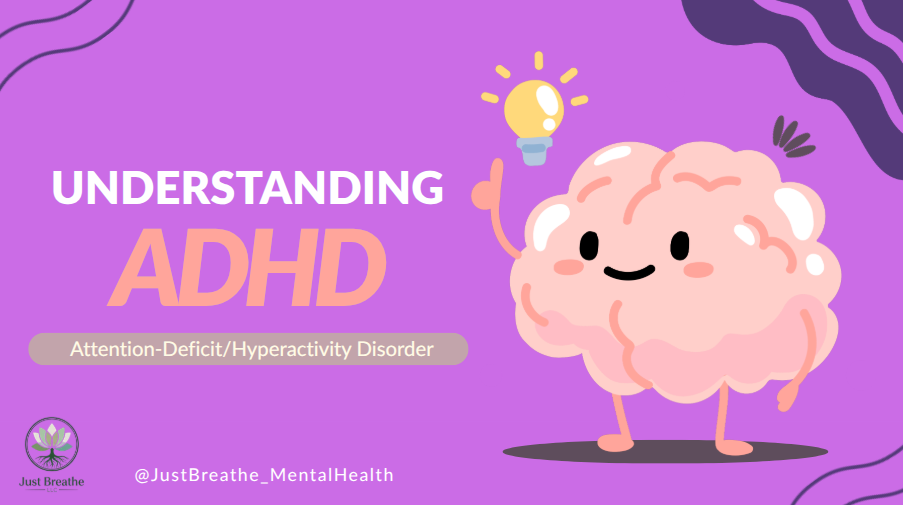
Attention-Deficit/Hyperactivity Disorder (ADHD) is more than simply being distracted. ADHD is a neurodevelopmental condition that can affect attention, executive functioning, organization, time management, emotional regulation, impulse control, memory, motivation, and many aspects of daily life. Symptoms vary from person to person and may present differently in children, adolescents, and adults, making diagnosis more complex for some individuals. ADHD can also occur alongside conditions such as anxiety, depression, learning disabilities, autism spectrum disorder, or sleep disorders, which may further influence how symptoms appear and are experienced.
Many individuals are not diagnosed until adolescence or adulthood, particularly those whose symptoms are more internalized or less disruptive. Understanding ADHD is an important step toward recognizing symptoms, obtaining an accurate evaluation, finding appropriate support, and developing practical strategies that improve daily functioning, relationships, academic or workplace performance, emotional well-being, and overall quality of life. With the right education, accommodations, and support, individuals with ADHD can build on their strengths, develop effective coping skills, and thrive in school, work, and everyday life.

Emotional distress can affect both the mind and the body. When stress, anxiety, trauma, or overwhelming emotions persist, the nervous system may remain in a heightened state of alert, contributing to physical symptoms such as muscle tension, headaches, digestive concerns, fatigue, sleep disturbances, and feeling constantly on edge. These responses are common and reflect the close connection between emotional and physical health.
Developing emotional regulation and distress tolerance skills can help calm the nervous system, improve resilience, and support overall mental and physical well-being. Healing isn't about eliminating emotions—it's about learning healthy coping skills, understanding your body's responses, and moving through difficult experiences with greater confidence, self-compassion, and support.
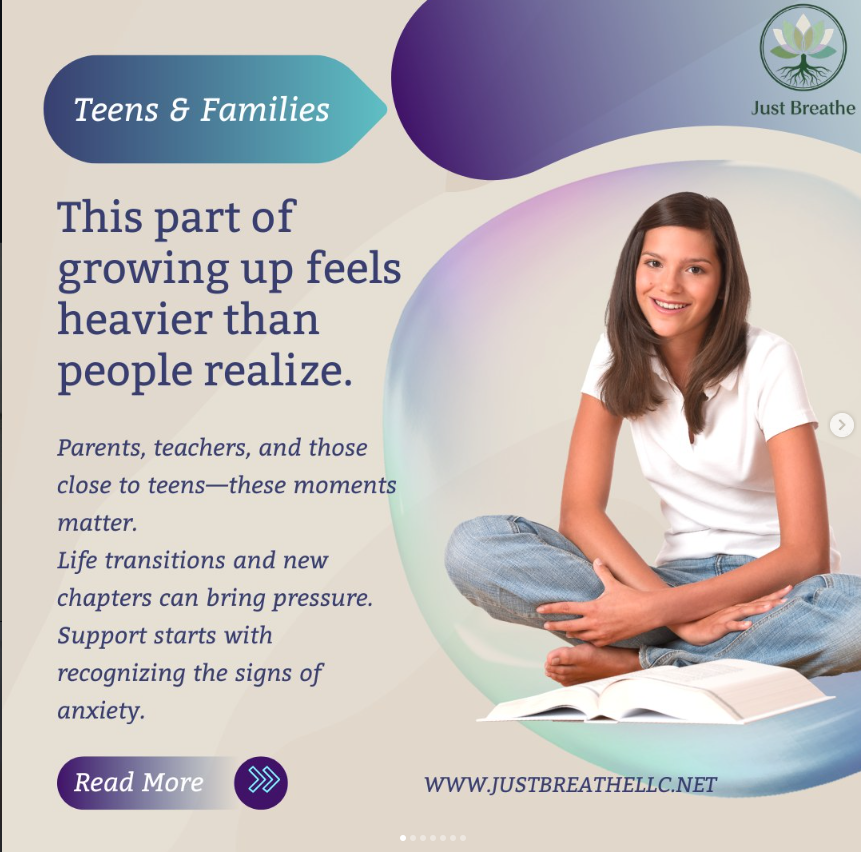
Major life transitions—such as starting middle school, entering high school, graduating, or preparing for adulthood—can bring excitement, but they can also increase stress, anxiety, and uncertainty. For many children, teens, and young adults, these changes involve adjusting to new expectations, relationships, routines, and responsibilities while managing the fear of the unknown. For some, additional challenges at home or in other areas of life can make these transitions even more overwhelming.
Research shows that anxiety and depression are common among adolescents, and emotional struggles are not always visible on the outside. Supporting young people through these transitions involves more than helping them prepare academically—it also means recognizing their emotional needs, encouraging open communication, building healthy coping skills, and creating a safe, supportive environment where they feel understood. Early support can strengthen resilience, improve emotional well-being, and help young people navigate life's changes with greater confidence.
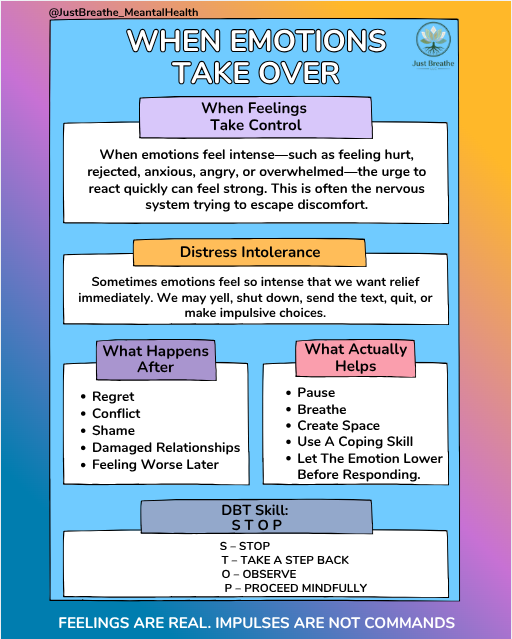
Strong emotions can make it difficult to think clearly, pause, and respond in the way we intend. When we feel hurt, anxious, overwhelmed, rejected, or angry, the brain may shift into survival mode, increasing the urge to react quickly rather than respond thoughtfully. This is often associated with distress intolerance—the difficulty tolerating uncomfortable emotions or stressful situations—and can lead to impulsive reactions, emotional overwhelm, or decisions we later regret.
Developing emotional regulation skills involves learning to recognize emotions, slow down, and choose responses that align with our values rather than reacting automatically. It's also important to remember that while our emotions are real and valid, our thoughts are not always accurate during moments of heightened emotion. Cognitive distortions, or thinking mistakes, can influence how we interpret situations and increase emotional distress. Practicing mindfulness, pausing before reacting, and using healthy coping skills can improve emotional regulation, strengthen resilience, and support healthier relationships and overall mental well-being.
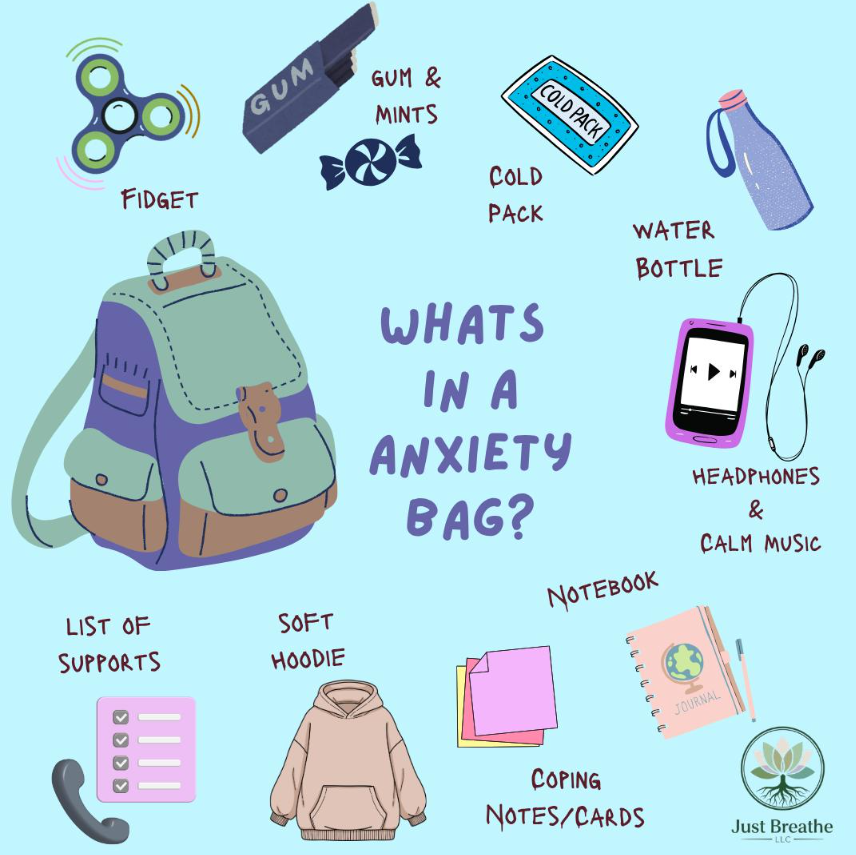
An anxiety toolkit is a simple collection of items that can provide comfort, grounding, and support during moments of stress or overwhelm. While these tools may not eliminate anxiety, they can help individuals regulate emotions, manage anxious thoughts, and feel more prepared in challenging situations. Items such as fidget tools, calming music, grounding objects, coping cards, journals, comfort items, or a list of trusted supports can promote emotional regulation and healthy coping skills.
An anxiety toolkit can be helpful for children, teens, and adults navigating school, work, social situations, travel, medical appointments, or other life transitions. Having personalized coping strategies readily available encourages self-awareness, builds confidence, and provides practical ways to manage anxiety and support overall mental well-being.
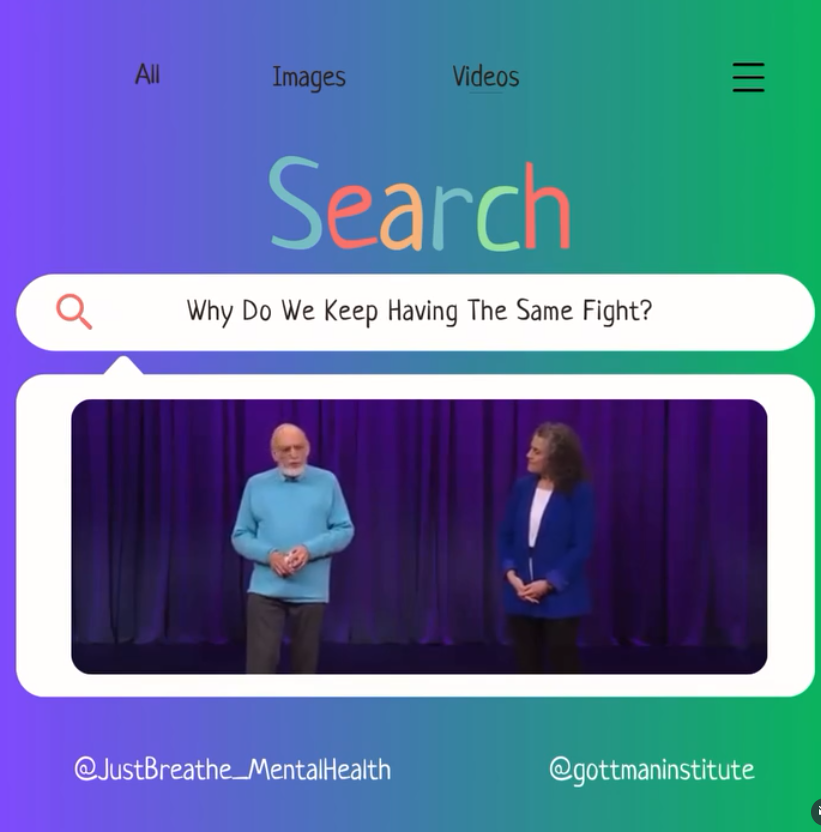
Conflict is a normal part of every relationship, but many disagreements are about more than the issue at hand. Research from the Gottman Method suggests that approximately 69% of relationship conflict involves ongoing, recurring differences rather than problems with a simple solution. While couples may argue about finances, parenting, household responsibilities, or communication, these conversations often reflect deeper needs such as feeling appreciated, understood, respected, emotionally connected, or supported.
Past experiences, attachment patterns, and nervous system responses can also influence how we experience conflict. During emotionally charged moments, partners may react not only to the current situation but also to what it represents based on previous experiences. Learning healthy communication skills, understanding conflict patterns, and approaching disagreements with curiosity instead of criticism can strengthen emotional connection, improve relationship satisfaction, and help couples work together as a team. Healthy relationships are not defined by the absence of conflict—they are strengthened by learning how to navigate conflict with empathy, respect, and understanding.
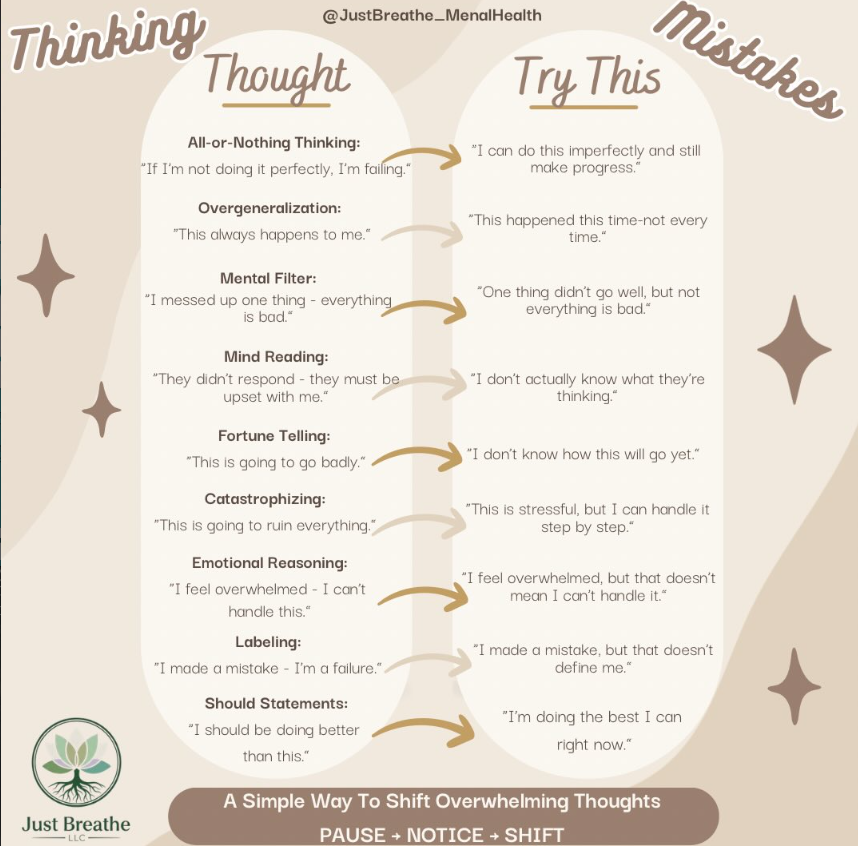
Our thoughts can feel incredibly convincing, especially during times of stress, anxiety, trauma, or emotional overwhelm. However, thoughts are not always facts. Cognitive distortions, also known as thinking mistakes, are common patterns of thinking that can influence how we interpret situations, increase emotional distress, and make challenges feel more overwhelming than they are.
Learning to recognize these thought patterns is an important step in improving emotional regulation, reducing anxiety, and developing healthier coping skills. The goal isn't to ignore your feelings or force positive thinking—it's to pause, create space between yourself and the thought, and consider a more balanced perspective. With practice, identifying and challenging thinking mistakes can strengthen resilience, support mental well-being, and help you respond to life's challenges with greater confidence and self-compassion.
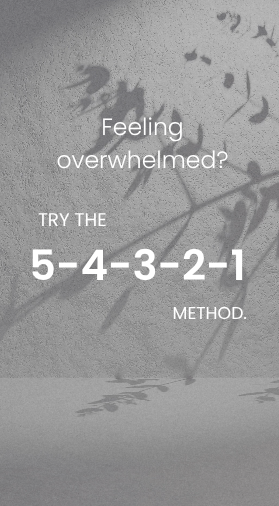
Stress, trauma, and even physical strain on the brain can affect how we think, feel, and function. When the brain becomes overwhelmed, it may shift into survival responses that make it more difficult to concentrate, regulate emotions, think clearly, or remain present in the moment. Grounding techniques are simple, evidence-informed coping skills that can help calm the nervous system and gently redirect attention to the present.
One commonly used strategy is the 5-4-3-2-1 grounding technique, which encourages you to identify five things you can see, four things you can feel, three things you can hear, two things you can smell, and one thing you can taste. This mindfulness exercise isn't about doing it perfectly—it's about creating a brief pause that helps your brain and body slow down, reconnect with the present, and reduce feelings of stress or overwhelm. Small tools like this can support emotional regulation, resilience, and overall mental well-being.
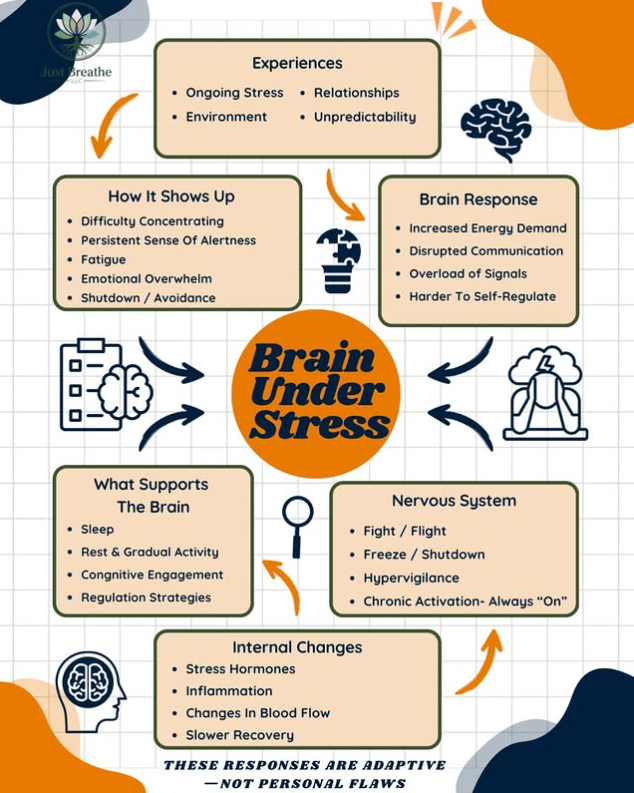
The brain and nervous system constantly work to keep us safe. When exposed to chronic stress, trauma, or a brain injury, they adapt in ways that can affect attention, memory, emotional regulation, energy levels, and daily functioning. Symptoms like brain fog, mental fatigue, difficulty concentrating, and feeling on edge are common nervous system responses—not personal failures. Supporting brain health through quality sleep, stress management, healthy coping skills, and mental health support can promote healing, resilience, and overall well-being.

Many people live with a chronic illness without realizing that what they're experiencing may have a medical explanation. Some chronic health conditions are invisible, fluctuate over time, or are frequently misunderstood by others. Symptoms such as persistent fatigue, brain fog, chronic pain, sleep disturbances, digestive concerns, dizziness, and headaches can affect daily functioning and have a significant impact on both physical and mental health.
Living with a chronic illness can also take an emotional toll. Mental health support can help individuals manage stress, anxiety, grief, life changes, and the psychological impact of ongoing health concerns while developing healthy coping skills, emotional regulation, resilience, and practical strategies for everyday life. A whole-person approach recognizes the connection between physical health, mental well-being, and quality of life, helping individuals build sustainable habits and feel supported throughout their healthcare journey.
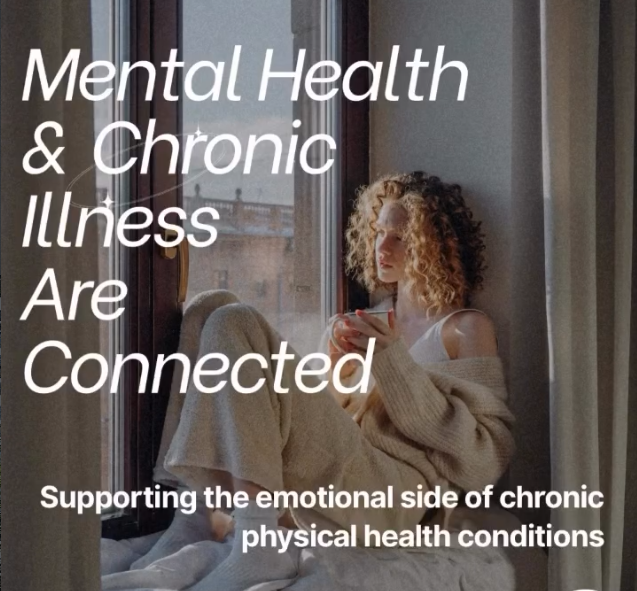
Mental health support can help individuals process difficult experiences, strengthen emotional regulation, develop healthy coping skills, and build sustainable strategies for long-term well-being. Whether you're navigating anxiety, depression, trauma, ADHD, life transitions, relationship challenges, chronic stress, or everyday life demands, support can provide practical tools to improve resilience, self-awareness, communication, and overall functioning. A whole-person approach recognizes the strong connection between emotional, physical, and social well-being, helping individuals build healthier habits, increase confidence, reduce stress, and create meaningful, lasting change.
Bullying can affect people of all ages and occur in schools, workplaces, homes, online, and within communities. It is not always physical—bullying may involve exclusion, intimidation, humiliation, repeated teasing, or the misuse of power and control. These experiences can have lasting effects on mental health, self-esteem, emotional well-being, and trauma responses that continue into adulthood. Raising awareness about bullying, respectful communication, and healthy conflict resolution is an important step toward creating safer, more supportive environments for children, adolescents, and adults.
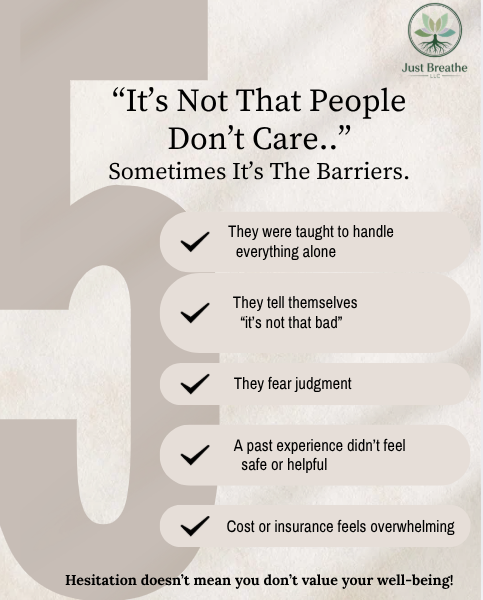
Seeking mental health support is not always as simple as deciding to ask for help. Many individuals face barriers that can make reaching out feel difficult, including family beliefs about mental health, fear of judgment, past negative experiences, financial concerns, or feeling that their struggles are not significant enough to deserve support. Hesitation does not mean you don't value your well-being. Sometimes it reflects the experiences, messages, and circumstances that have shaped how safe it feels to seek help. Understanding these barriers is often an important first step toward healing, self-awareness, and emotional wellness.

You don't have to figure everything out at once. Healing, personal growth, and emotional wellness often begin with one question, one conversation, or one small step forward. Developing healthy coping skills, increasing self-awareness, and building resilience are processes that take time. Every small step can strengthen your confidence, support your mental health, and create meaningful, lasting change. Progress isn't about perfection—it's about continuing to move forward, one step at a time, and recognizing that even the smallest steps can make a meaningful difference.
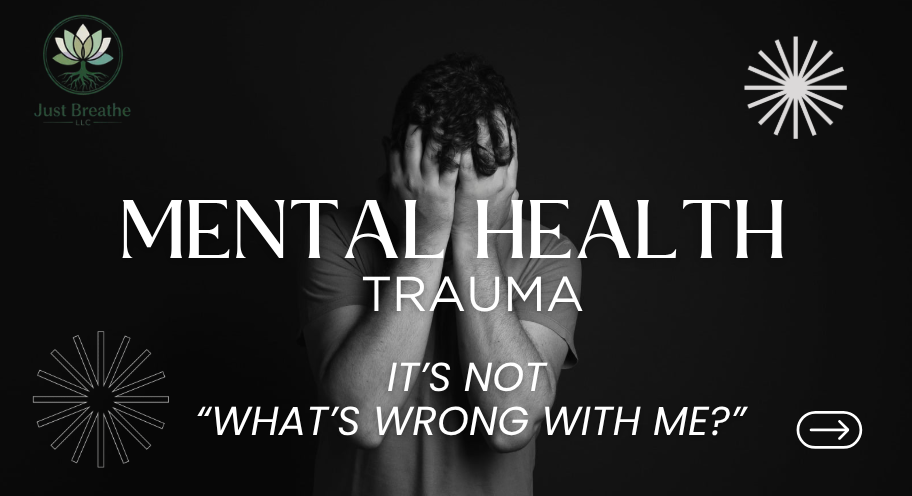
Trauma isn't always a single event. Sometimes it's the patterns, beliefs, and survival responses our nervous system develops to cope with difficult experiences. These responses may have once helped us feel safe, but over time they can affect our relationships, emotions, thoughts, and daily functioning. Healing begins when we shift from asking, "What's wrong with me?" to understanding, "What happened to me?" By recognizing these responses as adaptations rather than flaws, we can begin the process of healing, growth, self-compassion, and developing healthier ways to respond to life's challenges. With the right support, it is possible to build resilience, strengthen emotional regulation, and move forward with greater confidence and well-being.
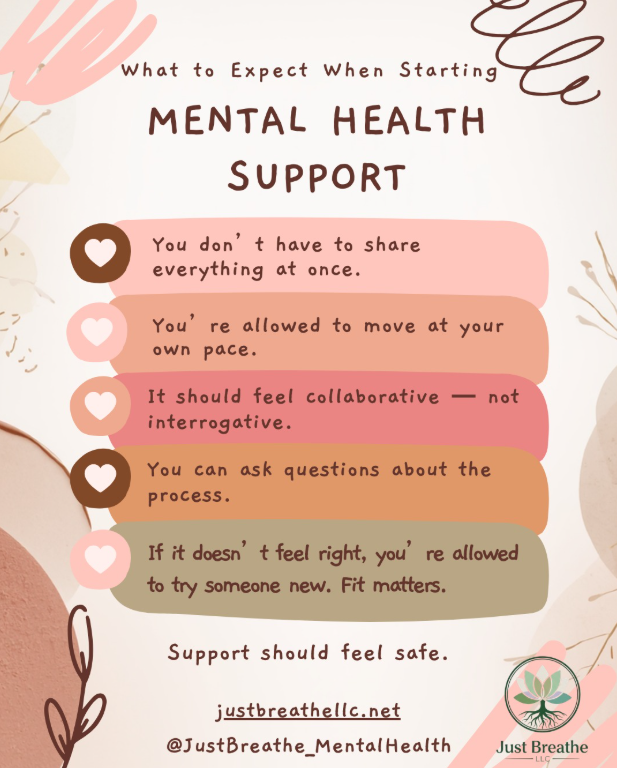
Starting mental health support can feel intimidating. Many people wonder what to say, how much to share, or whether they'll feel comfortable opening up. It's common to feel uncertain before your first appointment, especially if you've never worked with a mental health professional before or have had a difficult experience in the past. The good news is that you don't have to have everything figured out before seeking support. Healing and personal growth happen one step at a time, and you are allowed to move at a pace that feels right for you.
Mental health support is a collaborative process built on trust, respect, and understanding. Whether you're navigating anxiety, depression, trauma, ADHD, relationship challenges, life transitions, chronic stress, or simply feeling overwhelmed, seeking support is a meaningful step toward improving your emotional well-being. Sometimes hesitation isn't about a lack of motivation—it simply means you need a space that feels safe, supportive, and collaborative. Taking the first step doesn't require having all the answers; it simply requires giving yourself permission to begin.